

Hey there! As a supplier of HRC60 Tungsten Steel End Mills, I often get asked if these bad boys are suitable for machining aluminum. So, let's dive right into this topic and figure it out together.
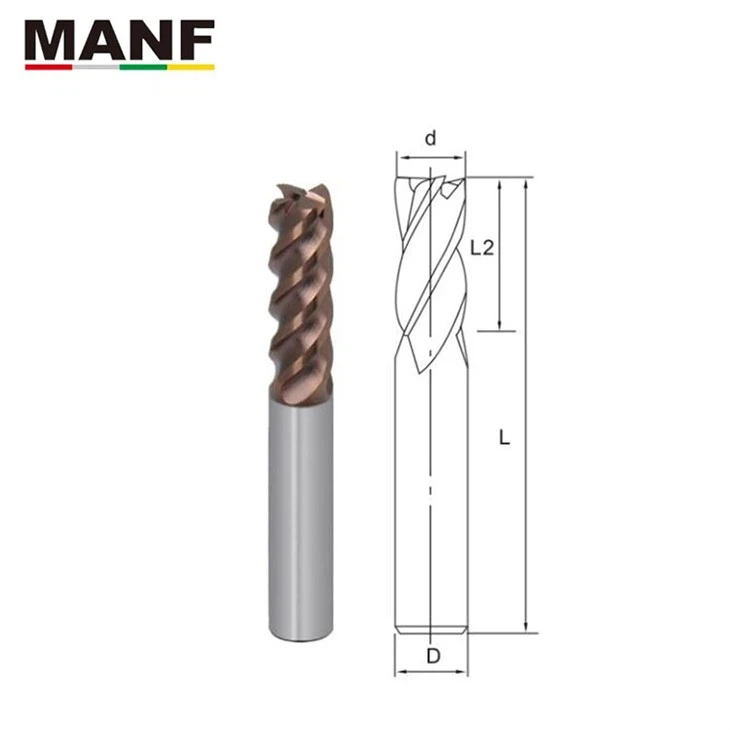
First off, let's talk a bit about what HRC60 Tungsten Steel End Mills are. HRC stands for Rockwell hardness scale, and a rating of 60 means these end mills are pretty darn hard. Tungsten steel is known for its high strength, wear - resistance, and heat - resistance. These end mills are designed to handle tough machining jobs and are widely used in various industries.
Now, let's look at aluminum. Aluminum is a soft, lightweight metal with excellent machinability. It's used in everything from aerospace components to consumer electronics. When machining aluminum, we need tools that can cut smoothly, generate less heat, and avoid built - up edge (BUE). BUE is when chips of the aluminum stick to the cutting edge of the tool, which can lead to poor surface finish and reduced tool life.
So, is an HRC60 Tungsten Steel End Mill up to the task of machining aluminum? Well, the answer is yes and no.

The Pros of Using HRC60 Tungsten Steel End Mills for Aluminum Machining
- Hardness and Wear Resistance: The high hardness of HRC60 tungsten steel means that the end mill can withstand the abrasion caused by aluminum chips. Even though aluminum is soft, the continuous cutting action can still wear down a tool over time. With an HRC60 end mill, you can expect a relatively long tool life, which means less frequent tool changes and more productivity.
- Cutting Performance: These end mills can provide a sharp cutting edge. A sharp edge is crucial for clean cuts in aluminum, as it reduces the chances of BUE. When the cutting edge is sharp, it can shear through the aluminum easily, resulting in a better surface finish on the machined part.
- Versatility: If your shop also deals with other materials besides aluminum, an HRC60 Tungsten Steel End Mill can be a great all - around tool. It can handle a variety of materials, from softer metals like aluminum to harder alloys. So, you don't have to invest in a different set of tools for each material.
The Cons of Using HRC60 Tungsten Steel End Mills for Aluminum Machining
- Heat Generation: Aluminum has a high thermal conductivity. During machining, a lot of heat is generated at the cutting edge. While HRC60 tungsten steel is heat - resistant to a certain extent, the high heat can still cause problems. Excessive heat can lead to thermal expansion of the tool, which can affect the dimensional accuracy of the machined part. It can also accelerate the wear of the tool, especially if the cutting parameters are not optimized.
- Built - Up Edge (BUE): Despite their sharp cutting edges, HRC60 tungsten steel end mills can still be prone to BUE when machining aluminum. Aluminum has a tendency to stick to the tool surface, and if the cutting speed, feed rate, or coolant is not right, BUE can form quickly. This can lead to a rough surface finish and may require additional finishing operations.
- Cost - Effectiveness: HRC60 Tungsten Steel End Mills are generally more expensive than some other tools specifically designed for aluminum machining. If your main focus is machining large volumes of aluminum parts, you might find that there are more cost - effective options available.
Tips for Using HRC60 Tungsten Steel End Mills to Machine Aluminum
- Optimized Cutting Parameters: To reduce heat generation and BUE, it's important to use the right cutting parameters. This means using a high cutting speed and a relatively high feed rate. However, you need to find the sweet spot for your specific application. Too high a speed can cause excessive wear, while too low a speed can lead to BUE.
- Coolant and Lubrication: Using a good coolant or lubricant is essential when machining aluminum with HRC60 Tungsten Steel End Mills. Coolant helps to reduce heat, flush away chips, and prevent BUE. There are different types of coolants available, such as water - based and oil - based coolants. Choose the one that suits your machining process best.
- Tool Coating: Consider using a coated HRC60 Tungsten Steel End Mill. Coatings like TiAlN (Titanium Aluminum Nitride) can improve the tool's performance when machining aluminum. The coating can reduce friction, prevent BUE, and increase the tool's heat resistance.
If you're still not sure whether an HRC60 Tungsten Steel End Mill is the right choice for your aluminum machining needs, you might also want to check out some of our other products. We offer the HRC60 Tungsten Steel Long End Mill, which can be useful for deep - pocket machining. For more demanding applications, our HRC70 4 Flute Tungsten End Mill provides even higher hardness and better cutting performance. And if you need to machine U - shaped grooves in aluminum, our HRC58 2 Flute U - shaped Groove End Mill is a great option.
In conclusion, an HRC60 Tungsten Steel End Mill can be used for machining aluminum, but it has its pros and cons. With the right cutting parameters, coolant, and possibly a coating, it can provide good results. However, if you're looking for the most cost - effective and specialized solution for high - volume aluminum machining, you might want to explore other options.
If you're interested in our HRC60 Tungsten Steel End Mills or any of our other products, feel free to reach out to us for a quote or to discuss your specific machining requirements. We're here to help you find the best tool for your job.
References
- "Machining of Aluminum Alloys" - ASM Handbook, Volume 16: Machining
- "Tool Materials for Metal Cutting" - Industrial Press Inc.


