




Carbide End Mill
Why Choose Us?
Rich Experience
Kunshan Meiyaxing Hardware Machinery Co., Ltd. is a company specializing in the production and sales of metal cutting tools. With more than 20 years of experience, we set new technology, high-end machinery and tool manufacturers as one, to provide customers with quality tools, is a direct branch of Hong Kong Meiya International Trading company.
Reliable Product Quality
We are proud of our high quality, cost-effective and good service, and have won the praise of customers in various industries such as aviation, medical equipment, automobile manufacturing, mold processing and electronic technology.
Wide Product Range
Kunshan Meiyaxing Hardware Machinery Co., LTD.'s products cover turning tools, milling tools, drilling and threading tools and tool holder clamping systems. Including carbide insert, CNC tool bar, tungsten steel milling cutter, drill, reamer, tap, boring head, tool holder, etc., widely used in aviation, medical equipment, automobile manufacturing, mold processing and electronic technology and many other industries.
Excellent Customer Service
We not only provide high quality and efficient cutting tools, but also have a superb technical team to provide professional and detailed processing solutions. We are trying to actively expand overseas partners, to ensure that in the future fierce competition in the market to occupy an advantage, win-win cooperation, look forward to working with you.
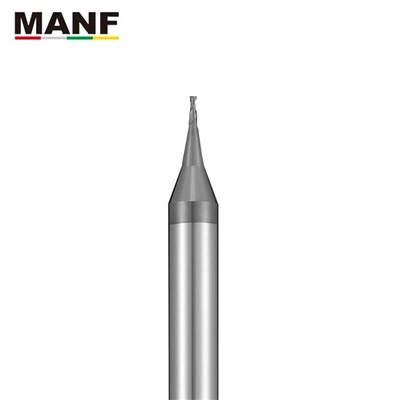
Carbide end mills are made of high-quality cemented carbide to make them equipped with better properties and more resistant to wear and heat than other end mills, so they are more suitable for cutting cast iron, alloys, or plastics. Now in the market, the manufacturers will add chemical coatings on carbide end mills to enhance performance and reduce friction. Solid carbide end mills provide extreme cutting performance, long tool life, and excellent process safety when machining demanding parts and are suitable for aerospace, medical, mold, power generation, and other industries.




Improved Tool Life and Durability
One of the biggest advantages of carbide end mill is its exceptional endurance compared to traditional HSS/Cobalt tools. The hardness and wear resistance of the carbide material allow for a longer tool lifespan, resulting in significantly fewer tool replacements and reduced production downtime. This ultimately leads to cost savings and increased production efficiency.
Enhanced Cutting Performance
Carbide end mill provides improved cutting performance, which translates to higher accuracy and surface finish quality. The tool’s sharp edges and consistent wear resistance enable it to achieve high speeds and feed rates while maintaining precision. Furthermore, carbide end mill is capable of cutting through a variety of materials, including hardened steels, stainless steel, and titanium. This versatility makes it a valuable tool in many different manufacturing applications.
Increased Heat Resistance
Carbide end mill is capable of withstanding extreme temperatures generated during high-speed cutting operations without deteriorating. The carbide structure also allows for efficient heat dissipation, preventing the tool from overheating and becoming damaged. This heat resistance is particularly important in industries such as aerospace and automotive, where high-temperature cutting operations are common.
Reduced Tool Deflection
The strength and rigidity of carbide end mill significantly reduce tool deflection or push off, which can cause inaccuracies and impair the overall quality of the finished product. By minimizing deflection, solid carbide tools produce consistent results and minimize material waste. In addition, carbide end mill is less prone to vibration, which can also impact the accuracy of the cutting process. This makes it an ideal choice for high-precision manufacturing applications.
Cost-Effectiveness
Carbide end mill is a popular choice for manufacturers due to its many benefits. It offers long-term cost savings, reduced downtime and maintenance costs, and improved production efficiency.
Long-Term Savings
Although carbide end mill can initially be more expensive than traditional HSS/CObalt tools, it offers long-term cost savings. Its durability and extended lifespan mean fewer replacements, reduced downtime, and increased production capacity. This means that manufacturers can save money in the long run by investing in carbide end mill.
Improved Production Efficiency
Carbide end mill’s performance and accuracy enhance production efficiency by allowing for faster machining speeds, fewer interruptions, and higher quality finished products. Increased efficiency leads to increased profitability in terms of reduced labor costs and improved throughput.
Square End Mills
Square end mills feature a square cutting end, making them suitable for general milling applications. The sharp corners of these end mills facilitate precise and clean cuts. Square end mills are commonly used for slotting, profiling, and roughing operations.
Ball Nose End Mills
Ball nose end mills have a rounded end, resembling a ball shape. These end mills are ideal for creating contoured surfaces, curved profiles, and 3D structures. They are commonly used in die and mold making, as well as in the aerospace industry for complex surface machining.
Corner Radius End Mills
Corner radius end mills are similar to square end mills, but they have a rounded corner instead of a sharp one. The radius on the cutting edge reduces stress concentration, resulting in improved tool life and surface finish. These end mills are often used for milling fillets and rounded corners.
Roughing End Mills
Roughing end mills are designed for removing large amounts of material quickly. They feature coarse-pitched teeth and a sturdy construction to withstand heavy cutting loads. Roughing end mills are typically used in rough machining operations to reduce cycle times and increase productivity.

Finishing End Mills
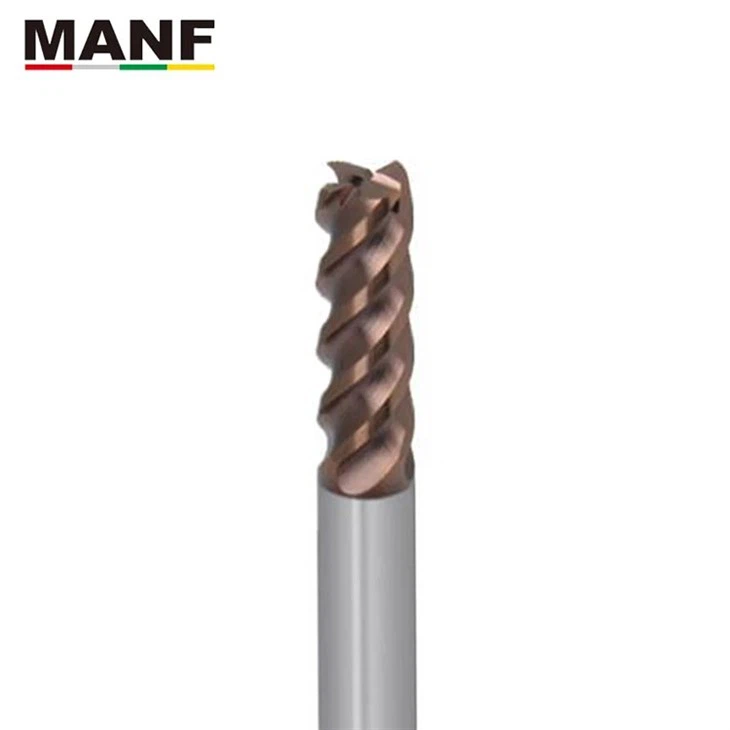
Finishing end mills have a fine cutting edge geometry, allowing for high-precision surface finish. They are designed to remove a small amount of material, leaving a smooth and polished surface. Finishing end mills are frequently used in final machining operations, such as profiling and contouring.
High-Performance End Mills
High-performance end mills are engineered for demanding applications that require enhanced cutting capabilities. They often feature specialized coatings, advanced geometries, and unique cutting edge designs. These end mills excel in high-speed machining, hard material milling, and improved chip evacuation.
Tapered End Mills
Tapered end mills have a gradually decreasing diameter towards the cutting edge. This design enables them to create tapered holes, slots, and chamfers. Tapered end mills are commonly used in die and mold making, as well as in woodworking for creating dovetail joints.
Application of Carbide End Mill
Milling Operations
Carbide end mills are primarily used in milling operations, where they are mounted on milling machines to remove material from a workpiece. Milling is a machining process that involves rotating a multi-toothed cutting tool (end mill) around its axis while feeding it into the workpiece to remove material and create desired shapes or features.
Metalworking
Carbide end mills are extensively used in metalworking applications, including the machining of metals like steel, aluminum, stainless steel, titanium, and other alloys. They are preferred over high-speed steel (HSS) end mills due to their superior hardness and wear resistance, allowing for faster and more efficient metal removal.
CNC Machining
In computer numerical control (CNC) machining, carbide end mills are commonly used to produce intricate and precise parts. CNC machines follow programmed instructions to perform various machining tasks, and carbide end mills play a crucial role in the accuracy and quality of the final product.
Aerospace Industry
The aerospace industry relies heavily on carbide end mills to machine critical components, such as aircraft parts, engine components, and structural elements. The high precision and cutting performance of carbide end mills are essential for meeting the stringent tolerances and requirements of aerospace applications.
Automotive Industry
Carbide end mills are widely used in the automotive industry for machining engine parts, transmission components, chassis components, and other critical parts. Their ability to cut hard materials with precision is vital in ensuring the durability and performance of automotive components.
Mold and Die Making
Carbide end mills are a popular choice in mold and die-making, where high precision and excellent surface finish are crucial. They are used to create molds and dies for plastic injection molding, metal stamping, and other forming processes.
Woodworking
Carbide end mills are also used in woodworking applications, such as milling wood for furniture, cabinetry, and other wooden products. Their hardness and cutting efficiency make them suitable for handling hardwoods and softwoods.
Cutting Exotic Materials
Carbide end mills are well-suited for cutting exotic materials, such as superalloys, hardened steels, and advanced composites. These materials are challenging to machine, but carbide end mills can handle the task with greater ease and precision.
Carbide End Mills Wear Principle
The heat and friction produced during metal cutting processes manifest energy. Extremely demanding machining conditions are created for carbide end mills by the heat and friction caused by the high surface load and the fast speed of the chip sliding over the front face.
The magnitude of the cutting rate fluctuates primarily based on the various machining circumstances (e.g., the presence of complex components in the workpiece material or interrupted cutting). Therefore, for carbide end mills to keep their strength at high cutting temperatures, they must possess fundamental qualities such as high hardness and wear resistance.
Although the cutting temperature at the carbide end mill/workpiece interface is crucial in determining the wear rate of almost all carbide end mill materials, it may be challenging to establish the parameter values necessary to compute the cutting temperature. Nonetheless, the measurement findings of the cutting test may serve as a foundation for specific empirical methodologies.
The History of Carbide End Mills
The revolutionary design of the end mill was created in the 1940s by Kenneth P. Stanback. Early on in his career he found that there was a gap in the selection of tools available for machining, leading him to dedicate countless hours perfecting the ‘constant spiral’ tapered end mill, which he promptly patented.
Stanback was the reason for many breakthroughs in the cutting tool industry during his lifetime. Through countless designs and trial and errors, he further created ten more different types of end mills which were soon followed by the cutting edge left-handed spiral tapered end mills. For many decades, Stanback was the backbone of his own company and a pioneer of the industry. At his company he indulged in every role possible, with no job too small to capture his attention. His roles included, but weren’t limited to, being the grinder, machine operator, cleaner, and salesman. For Stanback, 60-hour weeks were the norm. By the 1960s, his innovative end mill designs kept rising in popularity, resulting in him extending his business to over 30 countries worldwide ranging from Germany, Japan and all the way to the UK.
Stanback’s designs are still being used and innovated on even to this day. His revolutionary end mill tools are commonly used, nearly 80 years after he first crafted them. The most popular uses for end mills are for precise cutting and machining of parts or products, from jewellery designs, machine components, circuit boards, wood engravings, plastic cutting, and sign making.
Cobalt steel alloys, otherwise commonly referred to as HSS (High Speed Steel), and tungsten carbide are the two main composite materials end mills are crafted from. They are each suited for different uses, with carbide end mills being significantly more rigid and durable compared to HSS. Tungsten carbide is also extremely heat resistant, which is why it’s the preferred material to use when working with hard materials like cast iron, alloys and non-ferrous metals. HSS milling cutters are the cheaper option, however HSS suffers from a shorter life span and speed capacity compared to carbide end mills.
Tips When You Buy Carbide End Mill
Select the Appropriate Cemented Carbide Material
Carbide is the most often utilized material in the production of carbide end mills. The tungsten carbide grains are fused into a solid cobalt metal matrix. Longer tool life and reduced cycle times readily justify the extra cost in these applications. This material is harder than high-speed steel, although its toughness is not as good. Higher hardness levels give better wear resistance, while lower toughness levels make it more prone to breaking and chipping.
Choose Suitable Milling Cutters
When selecting a milling cutter, strive to match the milling cutter’s size to the surface size of the workpiece to be treated. End mills are typically utilized in production for the peripheral contour processing of flat workpieces; cemented carbide milling cutters are chosen for milling planes; and carbide end mills are favored for processing bosses and grooves. in manufacturing Corn cutters with carbide inserts are suggested for rough cutting the surface of the blank or hole; for some three-dimensional profiles and changeable bevel contour contours, utilize ball end milling cutters, ring cutters, and tapered milling cutters.
Use Multiple Flute Tools Where Appropriate
Flutes are helical grooves that wrap around the sides of an end mill and give the tool its name. When chipping lengthy materials like aluminum, tools with a lesser number of flutes (two to three flutes) will provide greater area for the flutes themselves. A greater number of flutes results in a smaller flute space, but it can lead to improved productivity in materials that require shorter chipping, such as iron and steel with a medium to high carbon content. A four flute carbide end mill is recommended for slotting applications while working with steel, stainless steel, high temperature alloys, and iron. This type of end mill may also be an excellent general-purpose tool.
Choose the Appropriate Coating
The coating is a key procedure that permits the carbide end mill to withstand wear. Although solid carbide end mills outperform and endure longer than high-speed steel in most applications, heat is not carbide’s friend. Over the last decade, advancements in coating technology have resulted in extended tool life and higher productivity. TiN (titanium nitride), TiCN (titanium carbon nitride), and the increasingly common TiAlN (titanium aluminum nitride) or AlTiN (aluminum titanium nitride)—the latter having greater aluminum content—are the three principal types of coatings utilized today. There are more coatings, but they are mainly offshoots of these three.
Before a carbide blank goes to the grinder, its part identity number is laser marked. This helps the customer to identify the tool. The next step is what experts call pre-grinding. They use a grinder with a rotating diamond wheel in conjunction with the rotating carbide blank and grind the tool down to the correct cutting diameter and length.
At this point there are no cutting flutes or edges yet. When grinding is complete, a robotic arm places the finished blank on a pallet and picks up the next carbide blank. Typically, no operator intervention is required during this production run.
The next step is to grind the actual cutting flute. Using another machine with two rotating diamond wheels. One wheel is used to rough grind the cutting geometry, while the second one is used to finish or polish the flute. This helps to ensure a more consistent tolerance over the production run because you are only grinding a minimal amount with the second wheel, so the wear on the diamond wheel is minimal and does not affect tolerances as quickly.
In addition, more force is absorbed by the first wheel, which has a rougher surface. During the grinding process, the tool is held stationary while the diamond wheels rotate around the carbide stock. A high-pressure, temperature-controlled oil-based coolant is used to lubricate the process, which also helps to maintain tolerances and grind quality.
Once the tool is finished, it is checked with a laser measurement system with pre-programmed measurement routines for each type of tool. If the devices detect a problem, they can stop the run and make corrections. The tool quality is also checked with an optical comparator under extreme magnification.
5 Tips that Can Save Thousands with Carbide End Mills
Two Flute Square End Tools Are a Good Solution for Most Projects
When it comes to selecting the right end mill for your project, two flute square end tools are often recommended. These mills are center cutting and specifically designed for slotting, plunging, and contouring. The wide flute design is perfect for chip evacuation, especially at higher feed rates with heavy peripheral cuts. Even better – the square end will produce a clean 90º angle when slotting.
Use Multiple Flute Tools Where Appropriate
Carbide end mills come in a variety of styles, and the number of flutes can range up to 12. Multi-flute tools will have different purposes, and in order to protect your investment, it is important that you use them appropriately.
Achieve Precise Angles with Square End Cutting Features
If you need to create a perfectly square corner, especially at the bottom of a channel, a square end mill is your best solution. A square end cutting feature can produce clean 90 degree angles at the bottom of the cut. Remember though, fewer flutes allow for better chip evacuation.
Consider High Helix Options
High helix carbide end mills – which might also be referred to as high-spiral, shallow wedge, or high helix angle end mills – are a type of high-performance cutter that is specifically designed for soft materials. Feed rates are much higher with these cutters, and there are a variety of benefits to choosing them:
● Reduced tool deflection
● Faster chip removal due to vertical chip evacuation
● Reduced risk of flute clogging
● Greater shearing action leads to reduced horsepower consumption
Extend the Life of Your Tool with a Radius Ground
To get the maximum return on your investment and extend the life of your carbide end mills, a radius ground is an excellent solution. The weakest point on an end mill is the sharp corner, so a ground radius on the tips will prevent chipping. The initial cost of carbide end mills might be high, especially for high performance and new designs. However, with proper considerations for the type of end mill that will work best for your application – along with proper set up – the cost will be offset by better finishes, greater productivity, and higher production.
How to Prevent Breakage and Chipping on Carbide End Mills
If you are drilling a particular piece of wood, it is wise to understand the differing diameters across the entire section you are drilling. If you get closer to a corner, the thickness may suddenly increase, resulting in a change of pressure and control. Adjust your pressure and control accordingly, so the end mill does not abruptly move.
The full potential of your carbide cutting capability can not be achieved unless the tool’s speed is up to par. Even if the rotation of the device is increased, you may not get the end result you were hoping for without sufficient tool speed.
Take your time and carefully plan out what and where you are cutting, the diameters, the specific lengths and pencil them in. These extra steps are great to practice when it comes to drilling with carbide end mills. These extra-precautionary steps will ensure your end mills avoid potential breakage.
When you finish using your end mills on a project, store them in their protective packages or toolboxes. Having an organized, protective space for your custom carbide end mills guarantees that they will remain in good shape for the long term.
Our Factory
Kunshan Meiyaxing Hardware Machinery Co., Ltd. is a company specializing in the production and sales of metal cutting tools. With more than 20 years of experience, we set new technology, high-end machinery and tool manufacturers as one, to provide customers with quality tools, is a direct branch of Hong Kong Meiya International Trading company. Since the establishment of the company - always uphold the "quality", "professional" and "efficient" business philosophy.
