

In the realm of precision machining, the choice of cutting tools can significantly impact the quality and efficiency of the manufacturing process. Among the various cutting tools available, the HRC60 Tungsten Steel End Mill stands out due to its exceptional hardness and cutting performance. In this blog, as a supplier of HRC60 Tungsten Steel End Mills, I will delve into how the cutting-edge geometry of these end mills affects their cutting performance.
Understanding HRC60 Tungsten Steel End Mills
Before we explore the impact of cutting-edge geometry, it's essential to understand what HRC60 Tungsten Steel End Mills are. HRC (Rockwell Hardness Scale C) is a measure of a material's hardness. An HRC60 Tungsten Steel End Mill has a hardness of 60 on the Rockwell C scale, which means it is extremely hard and can withstand high cutting forces and temperatures. Tungsten steel, also known as high-speed steel (HSS), is an alloy that contains tungsten, chromium, vanadium, and other elements. These elements contribute to the end mill's high strength, wear resistance, and heat resistance.
The Role of Cutting-Edge Geometry
The cutting-edge geometry of an end mill refers to the shape and design of its cutting edges. It includes parameters such as the number of flutes, helix angle, rake angle, relief angle, and corner radius. Each of these parameters plays a crucial role in determining the end mill's cutting performance.
Number of Flutes
The number of flutes on an end mill affects the chip evacuation and cutting force. Generally, end mills with more flutes can remove more material per revolution, resulting in higher feed rates and faster machining times. However, more flutes also mean less space for chip evacuation, which can lead to chip clogging and poor surface finish. On the other hand, end mills with fewer flutes have more space for chip evacuation, which is beneficial for roughing operations and machining materials that produce long chips. For example, a HRC50 Tungsten Steel End Mill may have a different number of flutes depending on the specific application.
Helix Angle
The helix angle is the angle between the flute and the axis of the end mill. A higher helix angle results in a smoother cutting action and better chip evacuation. It also reduces the cutting force and vibration, which can improve the surface finish and tool life. However, a higher helix angle also makes the end mill more prone to deflection and chatter, especially when machining hard materials. Therefore, the helix angle should be selected based on the material being machined and the cutting conditions. For instance, a HRC58 2 Flute U-shaped Groove End Mill may have an optimized helix angle for machining specific materials.
Rake Angle
The rake angle is the angle between the rake face of the cutting edge and a reference plane perpendicular to the cutting velocity. A positive rake angle reduces the cutting force and power consumption, making the cutting process more efficient. It also improves the chip flow and surface finish. However, a positive rake angle also reduces the strength of the cutting edge, making it more prone to wear and chipping. A negative rake angle, on the other hand, increases the strength of the cutting edge but requires higher cutting forces. The choice of rake angle depends on the material being machined and the cutting conditions.
Relief Angle
The relief angle is the angle between the flank face of the cutting edge and a reference plane perpendicular to the cutting velocity. The relief angle prevents the flank face of the cutting edge from rubbing against the workpiece, which can cause heat generation, tool wear, and poor surface finish. A larger relief angle reduces the friction between the tool and the workpiece, improving the tool life and surface finish. However, a too-large relief angle can weaken the cutting edge and lead to chipping.
Corner Radius
The corner radius is the radius of the corner of the end mill. A larger corner radius can increase the strength of the cutting edge and reduce the stress concentration at the corner, which can improve the tool life. It also helps to prevent the corner from chipping and provides a better surface finish. However, a larger corner radius may not be suitable for applications that require sharp corners or fine details.
Impact on Cutting Performance
The cutting-edge geometry of an HRC60 Tungsten Steel End Mill has a significant impact on its cutting performance. Here are some of the key aspects:
Material Removal Rate
The number of flutes and helix angle play a crucial role in determining the material removal rate. End mills with more flutes and a higher helix angle can remove more material per revolution, resulting in a higher material removal rate. This is particularly important for roughing operations where the goal is to remove as much material as possible in the shortest time.
Surface Finish
The helix angle, rake angle, and relief angle all affect the surface finish. A higher helix angle, positive rake angle, and larger relief angle can result in a smoother cutting action and better chip evacuation, which can improve the surface finish. This is essential for finishing operations where a high-quality surface finish is required.
Tool Life
The cutting-edge geometry also affects the tool life. A well-designed cutting edge with an appropriate rake angle, relief angle, and corner radius can reduce the cutting force and stress concentration, which can extend the tool life. Additionally, a good chip evacuation design can prevent chip clogging and reduce the wear on the cutting edge.
Cutting Forces
The number of flutes, rake angle, and helix angle all influence the cutting forces. End mills with fewer flutes, a positive rake angle, and a higher helix angle generally require lower cutting forces. This can reduce the power consumption and wear on the machine tool, as well as improve the stability of the cutting process.
Case Studies
To illustrate the impact of cutting-edge geometry on cutting performance, let's consider some case studies.
Case Study 1: Machining Aluminum
In a machining operation where aluminum is being machined, an end mill with a high helix angle and a positive rake angle can be used. The high helix angle allows for better chip evacuation, while the positive rake angle reduces the cutting force. This results in a smooth cutting action, high material removal rate, and good surface finish.
Case Study 2: Machining Stainless Steel
When machining stainless steel, an end mill with a negative rake angle and a larger corner radius may be more suitable. The negative rake angle increases the strength of the cutting edge, which can withstand the high cutting forces and heat generated when machining stainless steel. The larger corner radius reduces the stress concentration at the corner, improving the tool life.
Conclusion
In conclusion, the cutting-edge geometry of an HRC60 Tungsten Steel End Mill has a profound impact on its cutting performance. By carefully selecting the number of flutes, helix angle, rake angle, relief angle, and corner radius, manufacturers can optimize the end mill's performance for different materials and applications. As a supplier of HRC60 Tungsten Steel End Mills, we understand the importance of cutting-edge geometry and offer a wide range of end mills with different geometries to meet the diverse needs of our customers.

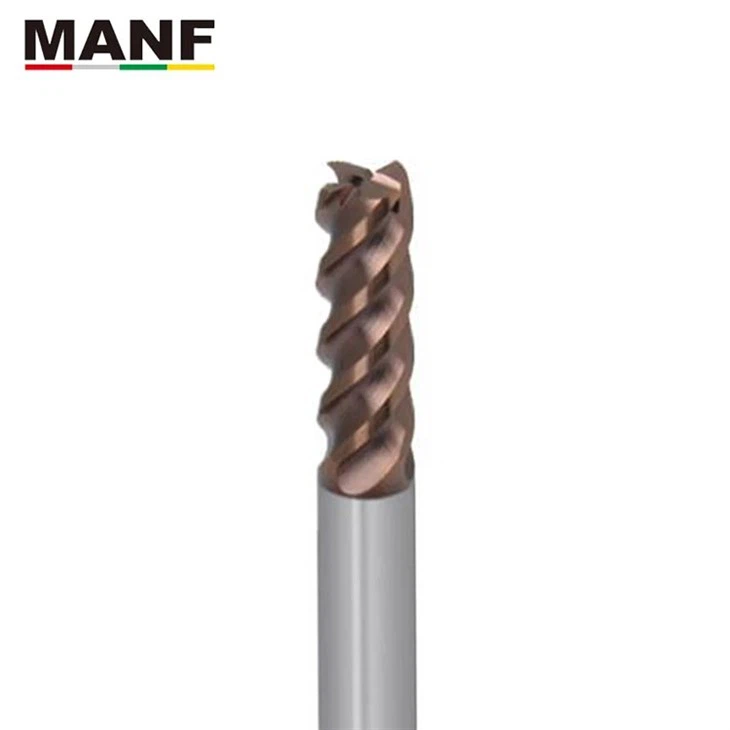
If you are interested in purchasing HRC60 Tungsten Steel End Mills or have any questions about our products, please feel free to contact us for a detailed discussion and procurement negotiation. We are committed to providing high-quality products and excellent customer service.
References
- Boothroyd, G., & Knight, W. A. (2006). Fundamentals of machining and machine tools. CRC Press.
- Trent, E. M., & Wright, P. K. (2000). Metal cutting. Butterworth-Heinemann.
- Stephenson, D. A., & Agapiou, J. S. (2006). Metal cutting theory and practice. CRC Press.


