




Milling Inserts
Why Choose Us?
Rich Experience
Kunshan Meiyaxing Hardware Machinery Co., Ltd. is a company specializing in the production and sales of metal cutting tools. With more than 20 years of experience, we set new technology, high-end machinery and tool manufacturers as one, to provide customers with quality tools, is a direct branch of Hong Kong Meiya International Trading company.
Reliable Product Quality
We are proud of our high quality, cost-effective and good service, and have won the praise of customers in various industries such as aviation, medical equipment, automobile manufacturing, mold processing and electronic technology.
Wide Product Range
Kunshan Meiyaxing Hardware Machinery Co., LTD.'s products cover turning tools, milling tools, drilling and threading tools and tool holder clamping systems. Including carbide insert, CNC tool bar, tungsten steel milling cutter, drill, reamer, tap, boring head, tool holder, etc., widely used in aviation, medical equipment, automobile manufacturing, mold processing and electronic technology and many other industries.
Excellent Customer Service
We not only provide high quality and efficient cutting tools, but also have a superb technical team to provide professional and detailed processing solutions. We are trying to actively expand overseas partners, to ensure that in the future fierce competition in the market to occupy an advantage, win-win cooperation, look forward to working with you.
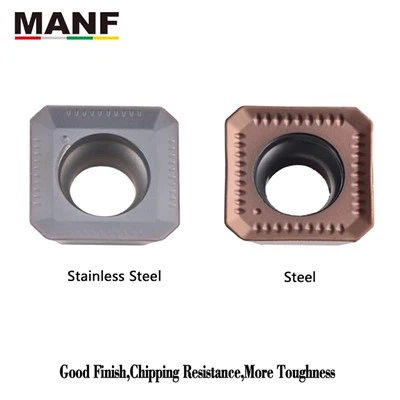
Milling inserts are replaceable bits used in milling cutting tools to shape or cut steel, stainless steel, cast iron, non-ferrous materials, Titanium, hardened steel, and plastic. They are generally made from carbide steel, which allows them to be durable at extremely high temperatures and during high-speed applications. Furthermore, milling inserts are designed to protect your milling cutter from damage brought about by extreme heat and force to ensure long serviceable tool life. Carbide milling inserts are available in various geometric shapes and sizes.



Efficiency And Precision In Material Removal
One of the primary benefits of milling inserts is their ability to remove material efficiently and precisely. The multi-point cutting edges of these tools allow for continuous cutting action, leading to higher productivity. The precision of material removal is dependent on the type of cutter used, with some designed for roughing operations and others for finishing operations, thus enabling both rapid material removal and fine detailing.
Versatility And Flexibility In Machining Operations
Milling inserts offer versatility and flexibility in machining operations owing to their varied designs. For instance, end mills can perform multiple types of milling operations, including profiling, slotting, and contouring. Similarly, face mills are excellent for creating large, flat surfaces. This versatility allows a single machine to perform a wide array of tasks, contributing to operational efficiency.
Enhanced Surface Finishes And Tool Longevity
The design of milling inserts also contributes to enhanced surface finishes. For instance, radius end mills with rounded corners can produce a smoother finish compared to sharp-edged cutters. Furthermore, certain milling inserts, such as those with coated or carbide inserts, offer extended tool life, reducing the frequency of tool replacement and thus minimizing downtime.
Applications In Various Machining Processes
Milling inserts find applications in various machining processes, from basic shaping tasks to complex, high-precision operations. The choice of cutter depends on the specific process – thread milling inserts for creating threads, dovetail cutters for dovetail slots, and so on. This wide range of applications makes milling inserts an indispensable part of any machining setup.
High-Performance And General-Purpose Tooling
Milling inserts can be broadly classified into high-performance and general-purpose categories. High-performance milling inserts are designed to withstand high cutting speeds and feed rates, offering improved productivity and part quality. On the other hand, general-purpose milling inserts are designed for a wide range of materials and operations, offering flexibility in machining tasks. The availability of both types of tooling ensures that milling inserts can cater to a broad spectrum of machining requirements.
Types of Milling Inserts
The end milling insert is a multipurpose instrument that cuts teeth on the end and along the edge of the workpiece. It comes in a variety of shapes, including square, ball-nose, corner radius, and tapered. In milling processes, end mills are typically used to form slots, shape surfaces, and drill holes. Square end mills are excellent for roughing and slotting, but ball-nose end mills are ideal for 3d contouring and profiling, producing smooth curves and complicated shapes.
The face milling insert is a milling insert with many cutting edges that has a large diameter. Its principal function is to machine or face flat surfaces on a workpiece. Face mills are very effective for machining broad areas because their many teeth allow for efficient material removal. These inserts are frequently employed in industries that need big component cutting, such as construction equipment and automobile parts. They are also used to square up blocks or surfaces and to provide smooth, even finishes.
Slab milling inserts are similar to face milling inserts but have a lower diameter. They are great for machining big, flat surfaces since they have several cutting edges and are built for heavy-duty material removal. Slab mills are frequently used to create keyways, slots, and pockets in workpieces. They can sustain strong cutting forces due to their robust structure and are frequently used in roughing operations to remove significant amounts of material quickly.
The ball nose insert derives its name from the ball-shaped cutting end. It is a versatile tool that may be used for 3d contouring, profiling, and finishing. The ball nose insert’s rounded tip allows it to seamlessly follow curved surfaces and form complicated designs. These inserts are commonly employed in the mold-making business to create intricate molds and dies. They can also be used to create organic shapes and beautiful engravings on a variety of materials.
Metal slitting saws, also known as slitting inserts, are thin and contain many teeth. They are generally used for cutting thin holes or slots in materials, and they are available in a variety of widths to produce a variety of slot sizes. Slitting inserts are often used for cutting thin components and slitting tubes or pipes in metalworking and woodworking applications. They’re also used in the metalworking industry to cut pieces from larger bars or sheets.
Thread milling inserts are used on workpieces to mill internal and external threads. These inserts can generate threads with greater precision and flexibility than standard thread tapping. Thread milling inserts are very useful for cutting big threads, unusual thread profiles, or difficult-to-reach workpiece locations. They are widely used in the manufacture of precision screws, fasteners, and threaded components.
Shell end milling inserts are huge, cylindrical inserts having cutting teeth around the circumference and sometimes on the face. They are designed for heavy-duty use and are used to grind flat surfaces and shapes. The shell end milling insert is frequently used to quickly and efficiently remove material, making it excellent for roughing operations. When necessary, it can also achieve clean, accurate finishes.
Carbon Tool Steel: This is an inexpensive metal material with good machinability for making mill-cutting tools. This material contains 0.6 -1.5% carbon and usually less than 0.5% of Manganese and silicon. It could also include metals like Chromium and Vanadium, depending on the grain size and hardness the manufacturer wants to achieve.
High-Speed Steel (HSS): This is carbon steel but with a small amount of molybdenum, tungsten, chromium, and other alloying metals that makes it considerably different from conventional carbon steel. With the addition of these alloys, high-speed steel has a higher toughness, wear resistance, and hardenability, giving it a higher metal removal rate.
Cemented Carbide Tool and Cermet: This mill tool produced by the powder metallurgy technique is extremely hard and can withstand cutting operations at very high speed. This material, composed of tungsten, titanium carbide, and tantalum, remains hard up to 1000°C. There are different binders manufacturers use for binding the constituents of this tool, which include cobalt, nickel, and molybdenum.
Ceramic: This material is non-reactive and harder than its cermet counterparts. It also has better resistance to heat, wears, and tear resistance than Carbides. This heat resistance makes ceramic milling inserts ideal for milling super alloy workpieces. For hard materials, high heat is required for ceramics to function properly.
Stellite: This is a non-ferrous alloy material made only by grinding or casting. It contains different quantities of chromium and cobalt. It could also contain tungsten or molybdenum. Cutting edges using this material retain their quality even at extremely high temperatures and speeds.
Application of Milling Inserts
Milling Inserts Used in the Sign Industry
Signs and the information that they carry have evolved into an essential component of everyday life. This enormous market is serviced by businesses of varying sizes, but all of these businesses have the same challenges when it comes to the routing of the supplies that are typical of this sector. Different materials, such as wood, aluminum, foam, and plastic, each have their own unique characteristics when it comes to cutting, and milling inserts have made it possible to handle any and all routing issues. This is especially apparent in the manner in which polymers are routed in the sign manufacturing business.
Use of Milling Inserts in Woodworking
The milling inserts have been optimized for optimal performance while cutting softwoods, hardwoods, wood, plastics, laminates, timber wood, and all sorts of laminates. In the landscape of the worldwide woodworking tools industry, milling inserts for woodworking account for 14% of the total market share. Over the next several years, demand for milling inserts for wood is anticipated to be driven in large part by the growing trend of automation in various sectors. Future Market Insights presents a comprehensive comparison and review analysis of the woodworking milling inserts market, which is primarily subjected to growth with rising demand for design furniture from residential as well as commercial sectors.
Milling Inserts Used for 3D Carving
In general, you will want milling inserts for tasks that are performed on a daily basis, as well as certain specialized bits for applications such as three-dimensional carving. Single or double flutes are the most common types of cutting edges found in milling inserts designed exclusively for 3D carving. The additional length provided by 3D carving milling inserts is required in order to carve 3D forms out of materials such as solid wood, plastic, foam, and others. The shape of the milling insert gives it increased strength while yet allowing for a relatively tiny radius at the very tip of the bit.
Milling Inserts Used for Grooving and Template Work
Additionally, template routing is flexible. This technique may be used to shape practically any component, no matter how big or little. It is effective for creating both straight and curved cuts, as well as mouldings. A serpentine drawer front, which includes a convex portion between two concave ones, or a simple straight-sided shelf for a corner cabinet, may be used as the component. Even though there are several ways to use milling inserts to cut grooves, utilizing a template is one of the most precise techniques and, in some situations, the only one.
How Is The milling Insert Used In Milling Machines?
Milling Machines are rotary, highly utilized subtractive manufacturing technology tools essential to the fabrication process of metals and plastics. Moreover, changing the tool to obtain the required design is advisable when milling. The milling machine tools perform the cutting process by removing material from a workpiece by rotating the cutter and moving it into the workpiece. Feed the workpiece into a spinning multi-point cutter in a milling machine that rotates rapidly to quickly cut the metal or plastic. The milling machine can hold single or multiple cutters at the same time to hasten the cutting process and speedily create desired shapes.
How to Make a Great Milling Inserts?
Materials Selection
Milling inserts have been the go-to tool for machine shops and metal fabricators for many years now when it comes to drilling holes. In point of fact, the first carbide tools were invented more than a century ago, and cobalt came along not long after they were introduced. Because of their durability, user-friendliness, and low cost, these general-purpose cutting tools are a popular among manufacturing facilities, job shops, and maintenance and repair facilities that must deal with a broad variety of workpiece materials. Carbide is used in the production of standard drills because of its mechanical qualities.
Cylindrical Grinding
The method of cylindrical grinding involves using a grinding wheel that rotates in a horizontal axis to cut or grind a cylindrical work-piece that is placed on a chuck or between centres that rotate in an axis that is parallel to the axis that the grinding wheel rotates in, in the same plane. In order to get the grinding process started, you have to make a reciprocating motion with the work-piece as you feed it to the rotating grinding wheel. You may adjust the depth of cut by moving the grinding wheel head closer to the component you’re working on.
Reverse Taper
The structure with a reverse taper has a shank portion, and the body of the structure is located at one end of the shank section. On an exterior surface of the body, there are two spiral grooves that combine to produce two spiral relief surfaces. The radius of the spiral relief surfaces becomes steadily smaller as one moves from the front end of the body to the shank section of the body. Taper shank drills are made of high-speed steel and are cutting tools that may be used to drill holes when connected to various types of machines such as drill presses, milling machines, and lathes.
CNC Machine Grinding
During the finishing process, CNC grinding machines are used to make a high-quality metal workpiece for camshafts, ball bearings, transmission shafts, and other working items that demand accuracy and precise finishes. This includes camshafts, ball bearings, and transmission shafts. The grinding process used in CNC machines may either use grinding wheels, abrasive heads, or abrasive cloths to remove the material.
Testing
Offering fully tested, proven, and certified milling insert, testing, production, and process packages that have been specially designed to add maximum value to clients’ exploration, appraisal, and production activities requires substantial experience in making milling inserts and quality fabrication operations. milling inserts of a high grade are produced because the manufacturers have a deep understanding of the relevant requirements and methods.
For the creation of milling inserts of the highest quality, well test and early production facilities utilize anything from stand-alone equipment like separators and surge tanks to fully integrated packages that include everything from heaters and heat exchangers to heaters. When the method of testing the milling insert is finished, the milling insert is transferred to the passivation process.
Passivation
The passivation process for milling insert is a method for improving the corrosion resistance of carbide parts. This is accomplished by removing ferrous contaminants such as free iron from the surface of the carbide parts, thereby restoring them to the original corrosion specifications they were designed to withstand. This harmless coating of chrome oxide is produced by nature when coming into contact with oxygen from the surrounding air. However, the passive layer is susceptible to being scraped or removed entirely.
Coating
The manufacturer applies a very thin layer of titanium nitride (TiN) to the whole surface of the milling insert so that it will last far longer. The method known as “physical vapor deposition” is the one that is used for the application of titanium nitride the vast majority of the time (PVD). During the physical vapor deposition process, a vacuum-sealed container containing solid titanium nitride is positioned next to the drill. Titanium nitride “sublimates” when it is heated in an environment with extremely low pressure, such as a vacuum.
Physical Characteristics of Milling Inserts
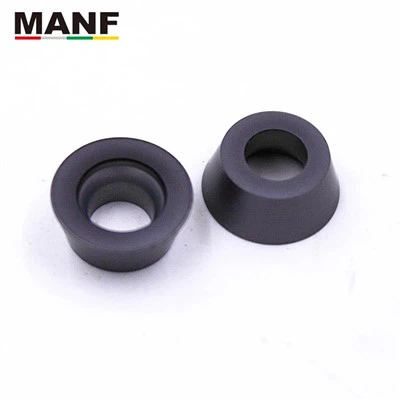
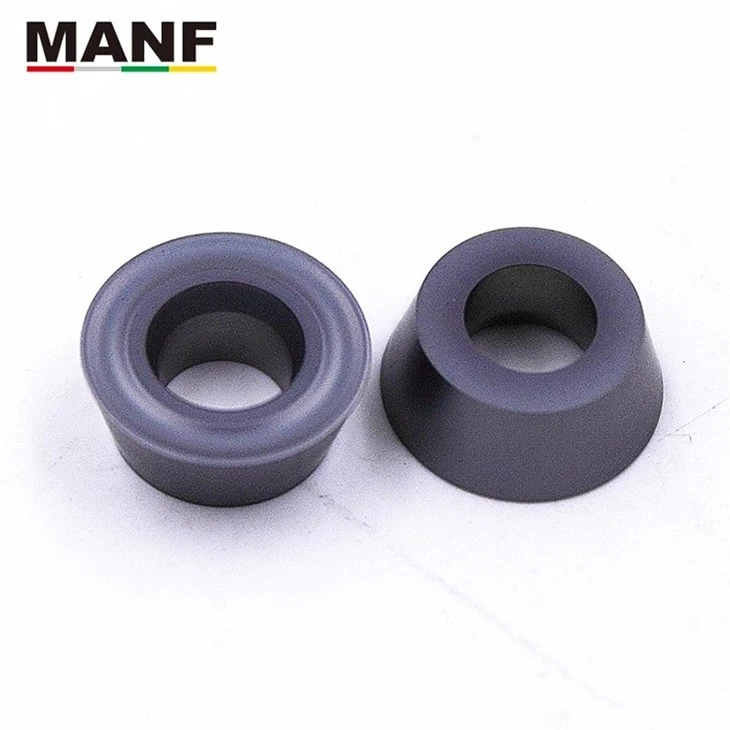
Milling inserts boast a diverse range of physical characteristics that are finely tuned to optimize machining performance. Firstly, these inserts come in a variety of shapes and sizes tailored to specific cutting tasks. Common shapes include square, triangular, round, and parallelogram, each designed to address different machining requirements and geometries. Triangular inserts, for instance, are ideal for general turning operations, while square inserts excel in facing and shoulder milling. Round inserts are often used for profiling and contouring, showcasing the adaptability of milling inserts to various machining scenarios.
In addition to shapes and sizes, a color-coding system is often employed for insert identification. Different manufacturers may use distinct color schemes to indicate insert types, grades, and intended applications. This system streamlines the selection process and helps machinists quickly identify the most suitable insert for a specific machining task, enhancing operational efficiency and accuracy.
Another critical aspect is the design of chip breakers on milling inserts. Chip breakers are strategically engineered features along the cutting edge that help control chip formation and evacuation during machining. These designs play a vital role in preventing chip entanglement, reducing heat generation, and enhancing chip disposal. Chip breakers vary in shape and placement, with options like straight, curved, and wavy configurations. The choice of chip breaker design depends on factors such as material type, cutting depth, and feed rate. For instance, a deep and robust chip breaker may be utilized for heavy roughing, while a finer chip breaker is preferred for finishing operations. The careful selection of chip breakers ensures improved chip control, reduced tool wear, and enhanced surface finish, highlighting the precision engineering inherent in milling insert design.
Milling inserts’ physical characteristics encompass a spectrum of shapes, sizes, color codes, and chip breaker designs. These aspects collectively empower machinists with the versatility and precision needed to achieve optimal results across a wide range of machining applications.
How Are Milling Inserts Measured and Described?
Milling inserts are measured using a combination of their diameter and the number of flutes they have. The diameter of a milling insert is measured from one side of the cutter to the other, passing through the center of the cutter. The number of flutes is the number of cutting edges that are present on the cutter.
In addition to the diameter and the number of flutes, milling inserts are also described by their cutting edge configuration and the material from which they are made. An end mill might be described as a “1/4-inch diameter, 2-flute HSS end mill,” and a ball end mill might be described as a “3/8-inch diameter, 4-flute carbide ball end mill.”
Milling inserts descriptions often include shank type and the type of mounting they use. An end mill might be described as having a “straight shank” or a “weldon shank,” or a face mill might be described as having a “shell mill mounting.”
Milling inserts can also be described by their intended use or the type of workpiece they are designed to cut. For example, a cutter may be described as a “roughing end mill,” a “finishing end mill,”or a “Woodruff cutter.”
When sizing a milling insert for a particular job, it can make the cut in a single pass if it is large enough to span the entire work surface. If this cannot be done, remember a small diameter cutter will pass over a surface in a shorter time than a large diameter cutter moving at the same speed.
Our Factory
Kunshan Meiyaxing Hardware Machinery Co., Ltd. is a company specializing in the production and sales of metal cutting tools. With more than 20 years of experience, we set new technology, high-end machinery and tool manufacturers as one, to provide customers with quality tools, is a direct branch of Hong Kong Meiya International Trading company. Since the establishment of the company - always uphold the "quality", "professional" and "efficient" business philosophy.
