




Thread Turning
Why Choose Us?
Rich Experience
Kunshan Meiyaxing Hardware Machinery Co., Ltd. is a company specializing in the production and sales of metal cutting tools. With more than 20 years of experience, we set new technology, high-end machinery and tool manufacturers as one, to provide customers with quality tools, is a direct branch of Hong Kong Meiya International Trading company.
Reliable Product Quality
We are proud of our high quality, cost-effective and good service, and have won the praise of customers in various industries such as aviation, medical equipment, automobile manufacturing, mold processing and electronic technology.
Wide Product Range
Kunshan Meiyaxing Hardware Machinery Co., LTD.'s products cover turning tools, milling tools, drilling and threading tools and tool holder clamping systems. Including carbide insert, CNC tool bar, tungsten steel milling cutter, drill, reamer, tap, boring head, tool holder, etc., widely used in aviation, medical equipment, automobile manufacturing, mold processing and electronic technology and many other industries.
Excellent Customer Service
We not only provide high quality and efficient cutting tools, but also have a superb technical team to provide professional and detailed processing solutions. We are trying to actively expand overseas partners, to ensure that in the future fierce competition in the market to occupy an advantage, win-win cooperation, look forward to working with you.
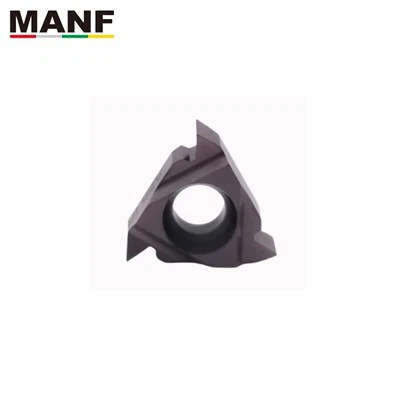
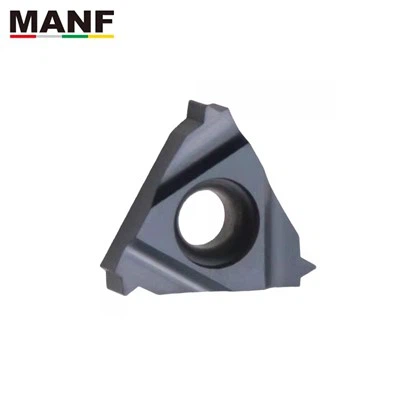
Thread turning is a machining process that involves cutting threads onto a workpiece using a lathe or CNC machine. This process is used to create internal and external threads on a wide range of materials, including steel, stainless steel, titanium, and non-ferrous metals. Thread turning can be done with a variety of tools, including threading inserts, threading dies, and threading taps. Threading inserts, also known as thread turning inserts, are cutting tools that are designed specifically for thread turning. They are made of high-quality materials such as solid carbide, which provide excellent wear resistance, durability, and precision. They come in different geometries, such as full profile, partial profile, and adjustable profile, to suit different threading applications.


Greater Precision And Accuracy
Thread turning uses specialized cutting tools, such as threading inserts, which are designed to provide precise and accurate cuts. This results in a consistent thread size and location, which is particularly important in industries such as medical and aerospace, where precision and accuracy are critical.
Greater Flexibility
Thread turning can be done with a variety of tools, such as threading inserts, which come in different geometries, such as full profile, partial profile, and adjustable profile, to suit different threading applications. This allows for greater flexibility in the machining process, enabling the use of various cutting tools and techniques.
Better Surface Finish
Thread turning tools are designed to provide a steady, controlled cut, which results in a better surface finish on the finished part. This can be important in applications where a smooth surface is required, such as in the aerospace and medical industries.
Increased Productivity
Thread turning can be done with a single tool, threading insert, which can create both internal and external threads, saving time and increasing productivity.
Better Durability
Thread turning inserts are made of high-quality materials such as solid carbide, which can withstand high cutting loads and maintain a sharp edge for a long time. This reduces the need for frequent replacement, and can save on costs in the long run.
Types of Thread Turning
External thread turning
External thread turning is often easier and less demanding on the tool than internal thread turning and there are a number of different methods which can be used to achieve the desired results.
To consider for external thread turning:
The feed rate must be equal the pitch of the thread
Choose an adequate number of thread cutting passes and depth of cuts
Chip formation, to avoid chips clogging around the tool and/or component
Avoid vibration caused by long tool overhangs and slender components
Tool alignment and centre height
Internal thread turning
Internal thread turning is more demanding than external thread turning, due to high need of efficient chip evacuation and that the tools often need to be longer and more slender.
To consider for internal thread turning:
Chip evacuation, especially in blind holes, is helped by using left-hand tools for right-hand threads and vice versa (pull-threading). However, this also creates higher risk of insert movement
Use modified flank infeed to generate a spiral chip, which is easy to guide towards the entry of the bore
Choose an adequate number of thread cutting passes and depth of cuts
Avoid vibration caused by long tool overhangs
Tool alignment and centre height
If a long tool is needed for reach, use a carbide or dampened tool to minimize vibrations
Common Problems with Thread Turning
Swarf Evacuation
A common factor in thread turning that will cause inserts to break is swarf wrapping around the job. There are ways and means of preventing this from happening, such as maintaining a strong flow of coolant onto the area that the tip is cutting and the cutting edge itself. This helps the swarf to evacuate whilst preventing the tip from overheating and burning out. An alternative method is changing the direction of your cut. For instance, if you are thread turning a right-hand thread towards the chuck, change to a left-hand threading tip. Cutting from the back of the thread towards the front can push the swarf off the front of the job and prevent it from staying wrapped around the job.
Selecting The Correct Grades And Cutting Data
Sometimes, finding the correct grades and cutting data can be time consuming (and as every engineer on the shop floor knows, time is money!). To combat this arduous process, which provides a straightforward and user-friendly app to help pinpoint the correct product, grades and cutting data. This ensures you are cutting your materials at the most optimum speeds possible.
Chatter And How To Prevent It
Thread turning chatter involves vibration from the lathe, workpiece tip or tool. Sometimes double checking the various constraints will help prevent chatter. Even a tiny piece of dirt in your tool holder can cause noticeable chatter and damage your workpiece. Making sure your setup is clean, well tightened up and on the correct centre height will greatly reduce the chance of chatter occurring, preventing hours of problems. If the problems continue, making your setup more solid may be of benefit. For example, make sure you have the job as close to the chuck and possible and minimum stick out of tools.
Pre-machining With A Turning Tool
Both productivity and tool life can be improved by pre-machining the thread using a turning tool with a 55° or 60° insert before the finishing pass is made with a threading tool. When machining threads with small radius roots and crests, similar pre-machining can also be done by rough threading using an insert with the same angle but a larger nose radius. An allowance is then left for the remaining finishing passes to be machined with the thread turning insert.
Modified Flank Infeed
For conventional thread turning applications, use modified flank infeed for the best chip control. The modified flank infeed allows threading to be treated more like a normal turning operation. It provides a controlled process, producing fewer chip problems, and hence, offering a predictable tool life and higher thread quality.
Opposite Flank Infeed
With opposite flank infeed, the insert can cut using the back flank (opposite flanking), meaning that the chip can be steered in the correct direction. This is important for internal thread turning operations, especially when machining in bottom holes. Use this method for continuous, trouble-free machining without unplanned stoppages.


Cutting Fluid And Coolant
Cutting fluid and tools with precision coolant are recommended for optimized chip control and chip evacuation. Precision coolant has the following advantages when thread turning:
Controlled temperature at the cutting edge
Good chip evacuation
Improved chip control
When external coolant is applied, often only a small amount of coolant enters the thread, and therefore, very little of the coolant will have an effect.
Diameter check
Make sure the workpiece diameter matches the specifications before thread turning.
With an excessively large diameter for external threading, or excessively small for internal threading, the first cut will be very large and can cause insert breakage.
An excessively small diameter for external threading, or excessively large for internal threading, can result in an incorrect thread diameter.
Tool Life
Close inspection of the insert after the threading operation will allow you to achieve optimum results in terms of tool life, cutting speed, and thread quality. The two main machining parameters that have an effect on tool life are infeed and speed. Increasing either of these parameters will decrease cutting time per component but will also increase the temperature. Too high a temperature will decrease the tool life.
What are the 5 Types of Thread Turning Tools?
Plug Taps
Plug taps have three to five threads that are used for through-hole tapping with metalworking machinery without using a starter taper tap. Plug taps are alternatively used as bottoming taps due to their usage. The best use for a plug tap is threading a thru-hole because the tap does not need to be run as deeply as a tapper to achieve the same results.
Power Taps
Power tap is known as spiral point plug & gun tap. They are used in holes that penetrate through the full length of material so that the chips can escape.
Hand Taps
Hand taps are widely used as thread turning tools as they give you excellent performance with minimal investment. Typically, they are used as a turning tool by removing material from a workpiece. Further, they are categorized in taper taps & bottoming taps where taper taps are complemented by a lot of tapers to make thread turning much easier & bottoming taps are ideal for threading blind holes.
Forming Taps
Forming taps deform material to produce the desired thread shape. These taps only work in malleable materials like aluminum or mild steel, which is why the formed threads are typically more robust than turning threads.
Extension Taps
Extension taps have long hanks that allow you to reach exceptionally deep holes. Its long sharks are used for tapping the hubs of pulleys for oil caps or set screws.
Key Elements of Thread Cutting
Single-Point Threading: Utilizing an indexable threading insert, this method involves a cutting tool whose shape and size are designed to match the thread profile you aim to achieve.
Feed Rate and Spindle Synchronization: The feed rate, which is the distance the tool advances in one spindle revolution, is critical and is always set to the thread’s lead, not its pitch.
Programming and Operation: CNC lathes rely on specific programming commands, such as G76, to execute thread cutting.
External vs. Internal Threads: When turning external threads, you’ll need to match the feed rate to the thread’s pitch and manage chip formation. Internal threading, on the other hand, calls for slender tools and efficient chip evacuation to prevent clogging.
Tool Selection and Strategy: Always refer to specific tool recommendations and seek advice for appropriate threading strategies.
Preparation: Add a chamfer to external thread ends and ensure a flat surface consistent with the thread’s central axis.
Design: Increase wall thickness for tubular parts to withstand pressure during threading and opt for standard thread sizes for economic efficiency unless custom sizes are specified.
Helical Structure
Threads are helical (spiral) structures that serve a dual purpose—converting rotational movement into linear force and vice versa and preventing any linear motion without corresponding rotation.
Functions and Applications
From fastening components securely to connecting pipes and hoses, threads facilitate gear reduction, precise linear motion, and even simultaneous measurement of that motion.
Male and Female Pairs
Threaded connections consist of male (external) and female (internal) threads, typically right-handed for standard use, while left-handed threads are less common but crucial for certain applications.
Form
The cross-section of a thread, commonly a truncated theoretical triangle, is designed for practicality and efficiency.
Lead and Pitch
Often confused, lead and pitch are distinct yet related. What is pitch in thread cutting? Lead is the axial distance covered by a full 360° rotation of the thread, while pitch is the distance from one thread crest to another.
Thread Diameters
A thread’s major diameter is its widest point, the minor diameter is its narrowest, and the pitch diameter falls in between, crucial for engaging male and female threads effectively.
Classes of Fit
This classification determines how snugly threads fit together, including the play or friction between them, which requires precise control of dimensions and surface finish.
How to Choose the Right Thread Turning Cutter?
Criteria For Selecting The Right Thread Turning Cutter?
This includes the desired material of the cutter, the material to be machined, the precision of the cutter, basic dimensional tolerances, size, processing method, brand, and price.
What Happens If A Poor Quality Thread Turning Cutter Is Chosen?
Choosing a poor quality thread turning cutter can lead to various issues. It may result in breakage during use and affect the quality of the output. It will be difficult to produce accurate threads, thus negating the purpose of turning. The processing speed may also decrease, affecting production efficiency. In the worst case, safety issues may arise as the cutter fails to securely fasten objects, potentially causing accidents. Therefore, it is essential to choose a high-quality thread turning cutter to prevent such incidents from occurring.
Are There Any Recommended Thread Turning Cutters?
As mentioned above, when selecting a thread turning cutter, it is important to consider the material and precision requirements. By examining the specifications of available products on the market, if you wish to work with materials such as stainless steel, cast iron, carbon steel, or aluminum alloy, and also take into account the brand, you may consider the carbide thread turning cutters from Seven Star Technology.
What Is the Importance of Choosing the Right Thread Turning Cutters?
It is important to choose the right thread turning cutter as it will ultimately affect the cost-effectiveness of producing each part. Selecting the incorrect tool will cost a workshop in two main ways. Either the tools will wear out and need frequent replacement (causing additional cost and standing time), or the time taken for thread turning will be longer than optimum, hindering the production rate. It is also possible to damage and scrap a part if the incorrect thread turning cutter is chosen, as the threads can be cut poorly and render the part unusable.
The choice of thread turning cutter will affect its performance in speed, quality, and cost-effectiveness. Time is money, and a shorter production time will always benefit a machine shop. Choosing the right thread turning cutter will allow the optimum production time to be achieved, with relatively high feeds and speeds without prematurely shortening the tool’s life. Extending tool life supports overall cost-effectiveness. A cutter should be selected for the hole and material to be threaded so that it does not experience excessive wear while still being able to thread at a reasonably high speed. This also affects quality. Heat buildup during threading can cause distortion, and other effects such as chatter and chip hammering can result in poor-quality threads.
Our Factory
Kunshan Meiyaxing Hardware Machinery Co., Ltd. is a company specializing in the production and sales of metal cutting tools. With more than 20 years of experience, we set new technology, high-end machinery and tool manufacturers as one, to provide customers with quality tools, is a direct branch of Hong Kong Meiya International Trading company. Since the establishment of the company - always uphold the "quality", "professional" and "efficient" business philosophy.
