




Threading Tool
Why Choose Us?
Rich Experience
Kunshan Meiyaxing Hardware Machinery Co., Ltd. is a company specializing in the production and sales of metal cutting tools. With more than 20 years of experience, we set new technology, high-end machinery and tool manufacturers as one, to provide customers with quality tools, is a direct branch of Hong Kong Meiya International Trading company.
Reliable Product Quality
We are proud of our high quality, cost-effective and good service, and have won the praise of customers in various industries such as aviation, medical equipment, automobile manufacturing, mold processing and electronic technology.
Wide Product Range
Kunshan Meiyaxing Hardware Machinery Co., LTD.'s products cover turning tools, milling tools, drilling and threading tools and tool holder clamping systems. Including carbide insert, CNC tool bar, tungsten steel milling cutter, drill, reamer, tap, boring head, tool holder, etc., widely used in aviation, medical equipment, automobile manufacturing, mold processing and electronic technology and many other industries.
Excellent Customer Service
We not only provide high quality and efficient cutting tools, but also have a superb technical team to provide professional and detailed processing solutions. We are trying to actively expand overseas partners, to ensure that in the future fierce competition in the market to occupy an advantage, win-win cooperation, look forward to working with you.
A threading tool is a cutting tool used to create threads on a workpiece. It typically consists of a shank, which is held in a tool holder, and a cutting edge or multiple cutting edges. The cutting edge is designed to remove material from the workpiece in a specific pattern, creating the desired thread profile.


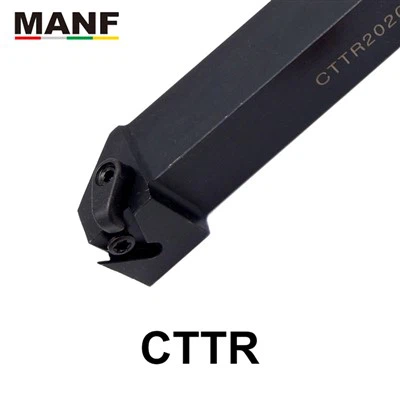

Stability
When processing difficult-to-machine materials such as titanium alloys, high-temperature alloys and high-hardness materials, the taps are often twisted or even broken in the parts due to too much cutting force. In the processing of long chip materials, once the chip removal is not smooth, the chips will wrap around the tap or block the orifice, often causing the tap to collapse or break in the part. Taking out the broken tap is time-consuming and laborious and may damage the parts. To solve this problem, we can use threading tools. Because the threading tool cuts into the material gradually, the cutting force it generates is small and the tool breaks rarely. Even in the event of a broken tool, since the diameter of the milling cutter is much smaller than that of the threaded hole, the broken part can be easily removed from the part without damaging the part.
High Precision
Because thread milling is done through high-speed tool rotation and spindle interpolation, it is convenient to process internal threads and remove chips. Thread milling belongs to chip-breaking cutting, and the chips are short and small. In addition, the diameter of the machining tool is larger than that of the thread to avoid the rotation line formed by the reversal of the tap (in the case of high sealing requirements, it is not allowed). Because there is no revolving line at all for processing the original milling cutter, and the tap cannot be avoided. The phenomenon of sticky chips is not easy to form. For relatively soft materials, chip sticking is prone to occur during processing, but threads require low machine power. Because thread milling is chip-breaking cutting, the tools are in local contact, the cutting force is small, and the tap tool breakage is easy to handle.
High Efficiency
High processing efficiency. We know that in large-volume thread processing, it is very difficult to improve processing efficiency due to the relatively low cutting speed limit of the tap and the reverse retraction after the thread is processed. However, if we use a threading tool, not only its own milling speed is very high, but its multi-slot design increases the number of cutting edges so that the feed speed can be easily increased, which can greatly increase the processing efficiency. In the processing of long threads, we can also choose a blade with a longer blade to reduce the axial feed distance (equivalent to shortening the thread) to further improve the processing efficiency.
Good Finish
When machining with a tap, it is quite difficult to obtain a good surface finish and thread accuracy due to the influence of the lower cutting speed and difficult chip breaking. However, nothing is a problem for thread milling! High cutting speed and small cutting force make the cutting surface very smooth; fine chips can be easily flushed out of the workpiece by the coolant without scratching the machined surface. For workpieces with higher thread accuracy requirements, because threading tools rely on helical interpolation to ensure accuracy, you only need to adjust the program to easily obtain the required high-precision threads. This feature has an absolute advantage in precision thread processing.
Low Cost
The threading tool is flexible to use and can be applied to a variety of working conditions. For example: we can use the same threading tool to machine left-hand threads or right-hand threads; we can machine both external threads and internal threads. All of this only needs to adjust the interpolation procedure. Using taps for machining, if there are multiple threaded holes with different diameters but the same pitch on the part, taps of different diameters are required.

Plug Taps: Plug taps have three to five threads that are used for through-hole tapping with metalworking machinery without using a starter taper tap. Plug taps are alternatively used as bottoming taps due to their usage. The best use for a plug tap is threading a thru-hole because the tap does not need to be run as deeply as a tapper to achieve the same results.
Power Taps: Power tap is known as spiral point plug & gun tap. They are used in holes that penetrate through the full length of material so that the chips can escape.
Hand Taps: Hand taps are widely used as thread cutting tools as they give you excellent performance with minimal investment. Typically, they are used as a cutting tool by removing material from a workpiece. Further, they are categorized in taper taps & bottoming taps where taper taps are complemented by a lot of tapers to make thread cutting much easier & bottoming taps are ideal for threading blind holes.
Forming Taps: Forming taps deform material to produce the desired thread shape. These taps only work in malleable materials like aluminum or mild steel, which is why the formed threads are typically more robust than cutting threads.
Extension Taps: Extension taps have long hanks that allow you to reach exceptionally deep holes. Its long sharks are used for tapping the hubs of pulleys for oil caps or set screws.
Application of Threading Tool
Hard To Cut Materials
If you're working with tough materials like hardened steel, Inconel, titanium, Threading tool is a good choice. When cutting more difficult materials thread mills really do come in to their own. The forces increase with taps leading to more breakages whilst with a thread mill you can control the number of passes to reduce cutting forces leading to a more consistent and higher quality thread.
Large Diameter Threads
When tapping holes above 20mm often some machine tools can struggle with the power required to drive the machine tap. Taps can become very costly at this size and threading tool should be seriously considered to not only reduce cost per hole but also reduce the chance of large tap breakages. Due to the very low cutting forces produced when threading tool they also greatly reduce the load on the machine compared to a tap.
Complex Thread Profiles
If you need to machine threads with a special or unusual form, then traditional tapping methods would not be an option. With threading tool, you have the flexibility to create custom thread profiles. This is particularly useful in industries like aerospace or automotive, where unique thread designs are common.
Threads With Interrupted Cuts
When you're threading through or blind holes that have interruptions like a cross hole, threading tool is a good choice. Tapping such holes can lead to problems with chip build up and tap breakages. threading tool speeds feeds and depths of cut can be adjusted to work around such features, ensuring consistent threads without the risk of chip build up or tool failure.
High Production Volume
If you're working on a large-scale production project, threading tool can be more efficient. With the right equipment and programming, threading tool can be automated and done at a faster rate than manual tapping. This saves time and increases productivity, making it beneficial for high-volume production.
What Is the Difference Between Threading Tool Turning and Threading Tool Milling?
Threading tool milling is performed on a milling machine, with thread turning using a lathe to produce threads. When choosing between the two, this will be the fundamental point which will dictate which option will be used. If both a mill and lathe is available to a user, there are other more subtle differences and benefits to each system which can be used in the decision-making process.
Size of the thread to be produced could also be a consideration. Typically, machine taps are more susceptible to breakages at lower diameters as smaller shanks cannot cope with the higher cutting data. Also, as a tap wears, the chance of breakage increases substantially, which is common amongst these smaller sizes. Thread mills are far more wear resistant and, with their carbide substrate, can withstand these higher feed rates with a much-reduced risk of breakage.
However, such circumstances can also be impacted by the machining set-up, with vibrations significantly reducing the tool life of carbide mills. Meanwhile, thread turning tools are better suited to larger diameter threading applications as it is far more cost-effective to purchase a holder and inserts than a solid carbide thread mill. As thread turning holders are made from steel, they are far cheaper to manufacture and therefore less cost-intensive to the end user.
Other considerations include the quality of thread and complexity of skill required to perform the operation. In general, and partly due to thread mills being better suited to smaller workpieces, thread mills will provide higher quality and more precise threads on workpieces. As thread milling applications are usually programmed on CNC mills, the user can more accurately direct the tool to produce the required thread.
There is a trade-off with this, in that the machine operator will need to have more knowledge and programming skills with CAD/CAM software to produce these complex thread milling applications. Thread turning, conversely, can be performed much more simply and in a similar fashion to turning or boring applications. The user must simply set up the threading tool in a lathe toolpost and position the tool towards the workpiece.
Select the Right Tool
Choose the appropriate threading tool for your specific application. Consider factors such as the type of thread (internal or external), material being threaded, thread standards, and desired thread specifications.
Prepare the Workpiece
Ensure that the workpiece is properly prepared before threading. This may include drilling a pilot hole for internal threads or ensuring the material is properly secured and aligned for external threads.
Use Cutting Lubricant
Apply cutting lubricant or coolant to the workpiece and threading tool. Lubrication helps reduce friction, dissipate heat, and improve chip evacuation. It also extends the tool life and improves thread quality.
Align the Tool
Proper alignment of the threading tool is crucial for accurate and clean thread cutting. Ensure that the tool is aligned perpendicular to the workpiece and properly centered to achieve the desired thread profile.
Gradually Cut the Thread
When using a tap or die, gradually cut the thread by making multiple passes. Start with a light initial cut and gradually increase the depth of each subsequent pass. This helps prevent excessive tool wear, reduces the chances of tool breakage, and improves thread quality.
Use Proper Cutting Speed and Feed Rate
Follow the recommended cutting speed and feed rate for the threading tool and material being threaded. Operating at the correct speed and feed rate helps optimize cutting performance and thread quality while minimizing tool wear.
Monitor Chip Removal
Ensure that chips are effectively removed from the cutting area to prevent chip clogging, which can lead to poor thread quality and tool damage. Clear away the chips regularly during the threading process.
Take Precautions for Safety
Wear appropriate personal protective equipment (PPE) such as safety glasses, gloves, and protective clothing to protect yourself from any potential hazards. Follow safe operating practices and adhere to any manufacturer guidelines or recommendations.
Inspect and Maintain Tools
Regularly inspect threading tools for any signs of wear, damage, or dullness. Replace or sharpen tools as necessary to ensure optimal cutting performance. Proper tool maintenance helps achieve consistent thread quality and prolongs tool life.
When a threading tool is used, it is mounted on a machine, such as a lathe or a CNC machine. The workpiece is then rotated while the threading tool is fed into it, creating the threads. The cutting edge of the threading tool removes material from the workpiece in a helical pattern, replicating the shape of the desired thread. Threading is a technique used in various industries to create threads on materials such as metal, plastic, or wood. It involves the use of a threading tool, which is a cutting tool specifically designed for this purpose. In this blog post, we will explore what a threading tool is, how it works, and its applications in different fields. Threading tools are essential cutting tools used in various industries for creating threads on different materials. Understanding how threading tools work and following proper techniques can help achieve accurate and high-quality threads. Whether it’s in manufacturing, plumbing, automotive, construction, or woodworking, threading tools play a crucial role in creating strong and reliable connections.

What Is the Difference Between Solid and Indexable Threading Tools?
Solid threading tools describe any tool which are made from a singular material, with no parts of the tool being detachable or interchangeable. Once the cutting edge has been worn down, the whole tool will need replacing. An indexable tool features a solid shank on which a replaceable insert acts as a cutting edge which will make contact with the workpiece. When an insert is worn down or chipped, the user can simply unclamp the insert, replace it, and continue machining. In the long run, especially at larger diameters, an indexable tool will provide the most cost benefit to the customer.
Due to the large size of the shank, single point threading (thread turning) holders are indexable. The replaceable insert element is usually made of carbide for extra strength, durability and tool life. Using an indexable system, the insert can be replaced whilst the tool holder remains in the toolpost. Similarly, thread mills are also supplied as indexable systems for larger diameters, but also come in a solid type for smaller sizes starting from under 1mm diameters. Machine and hand taps, due to their low cost, are solely supplied in a solid type.
Our Factory
Kunshan Meiyaxing Hardware Machinery Co., Ltd. is a company specializing in the production and sales of metal cutting tools. With more than 20 years of experience, we set new technology, high-end machinery and tool manufacturers as one, to provide customers with quality tools, is a direct branch of Hong Kong Meiya International Trading company. Since the establishment of the company - always uphold the "quality", "professional" and "efficient" business philosophy.
