




Mini Lathe Tool Holder
Why Choose Us?
Rich Experience
Kunshan Meiyaxing Hardware Machinery Co., Ltd. is a company specializing in the production and sales of metal cutting tools. With more than 20 years of experience, we set new technology, high-end machinery and tool manufacturers as one, to provide customers with quality tools, is a direct branch of Hong Kong Meiya International Trading company.
Reliable Product Quality
We are proud of our high quality, cost-effective and good service, and have won the praise of customers in various industries such as aviation, medical equipment, automobile manufacturing, mold processing and electronic technology.
Wide Product Range
Kunshan Meiyaxing Hardware Machinery Co., LTD.'s products cover turning tools, milling tools, drilling and threading tools and tool holder clamping systems. Including carbide insert, CNC tool bar, tungsten steel milling cutter, drill, reamer, tap, boring head, tool holder, etc., widely used in aviation, medical equipment, automobile manufacturing, mold processing and electronic technology and many other industries.
Excellent Customer Service
We not only provide high quality and efficient cutting tools, but also have a superb technical team to provide professional and detailed processing solutions. We are trying to actively expand overseas partners, to ensure that in the future fierce competition in the market to occupy an advantage, win-win cooperation, look forward to working with you.
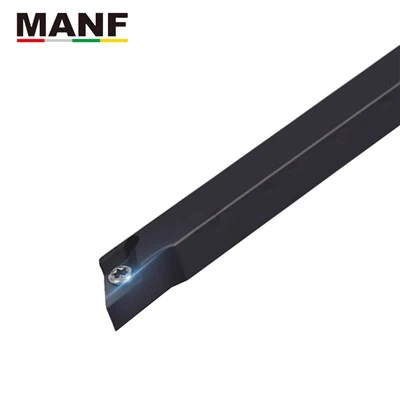
The mini lathe tool holder is an attachment system for the cutting tools used when machining on a lathe, or any other machine tool. That is, tool holders are used to attach a cutting tool during the machining process. They also facilitate torque transfer from the lathe spindle to the cutting tool. Different tool holders are required for different types of machining or cuts. It is essential they ensure high geometric accuracy to guarantee the quality of the finished parts. Maintenance is also crucial, because a tool holder with signs of excessive use can lead to costs due to defective parts.




Tool Rigidity and Stability
Lathe tool holders provide a stable and rigid platform for holding cutting tools. This rigidity reduces vibration and chatter during machining, which can improve surface finish, dimensional accuracy, and tool life. Additionally, the design of the tool holder helps to minimize deflection and maintain consistent cutting forces, resulting in more predictable machining performance.
Quick Tool Changes
Tool holders allow for quick and easy tool changes, which can significantly reduce setup time and increase productivity. Instead of having to manually set and align individual cutting tools, operators can simply swap out pre-set tool holders, reducing downtime between machining operations.
Precise Tool Positioning
Tool holders are designed to securely hold cutting tools in a specific position relative to the workpiece. This precise positioning helps to ensure accurate machining operations, such as turning, facing, grooving, and threading. Additionally, many tool holders incorporate features such as indexable inserts or adjustable tool heights, allowing for fine adjustments to tool geometry and cutting parameters.
Versatility and Adaptability
Tool holders are available in a variety of styles and configurations to accommodate different types of cutting tools, workpiece materials, and machining requirements. This versatility allows machinists to easily switch between different tooling solutions based on the specific needs of each machining operation.
Coolant and Chip Management
Some tool holders feature built-in coolant channels or chip evacuation systems to help improve chip control and extend tool life. Proper chip management is essential for maintaining consistent cutting performance and preventing chip buildup, which can lead to tool damage and poor surface finish.
Axial driven tool holders. This type of tool holder is used for machining on the axial plane of the part. There can be one or two tool directions for machining on the main and the sub-spindle of the lathe.
Radial driven tool holders. These are used for machining on the radial plane of the work piece, that is, on the plane perpendicular to the centre line of the spindles.
Internal turning tool holders. These tool holders are used to affect or machine the internal part of the piece with a variety of tools. They are used for drilling, reaming, tapping, boring, grooving, and profiling, among others.
External turning tool holders. These tool holders are used to machine the external faces of the work piece. They are classified into various types according to the tool to be used or the number of tools that can be attached. They are used for facing, profiling, grooving, screw cutting, parting off, knurling, and many more.

How Does the Mini Lathe Tool Holder Control Parameters Such as Cutting Depth?
As a key equipment in the field of mechanical processing, the control of the cutting depth of the mini lathe tool holder directly affects the processing quality and efficiency. Next, we will discuss in depth how the mini lathe tool holder can achieve precise control of parameters such as cutting depth.
First, the mini lathe tool holder achieves precise control of the cutting depth through an advanced CNC system. This system integrates sensors, actuators and control algorithms to monitor the position and cutting status of the tool in real time and dynamically adjust according to preset processing parameters. By inputting instructions such as cutting depth, the CNC system can calculate the distance the tool needs to move, and drive the tool to perform precise displacement through the actuator.
Secondly, the mini lathe tool holder is also equipped with a high-precision measuring device for real-time monitoring of the actual value of the cutting depth. These measuring devices accurately measure the gap between the tool and the workpiece in a non-contact or contact manner, and feed the measurement results back to the CNC system. The CNC system fine-tunes the tool position based on feedback data to ensure that the cutting depth is always within the set range.
In addition, the mini lathe tool holder also has an automatic compensation function to cope with the impact of factors such as tool wear on the cutting depth. When tool wear causes the cutting depth to change, the mini lathe tool holder can automatically detect and adjust the tool position to maintain a constant cutting depth. This automatic compensation function greatly improves the stability and reliability of processing.
The mini lathe tool holder achieves precise control of parameters such as cutting depth through advanced CNC systems, high-precision measuring devices and automatic compensation functions. This makes mini lathe tool holder have broad application prospects in the field of mechanical processing, which can improve processing quality, reduce production costs and improve production efficiency.
The Innovation Path Behind Mini Lathe Tool Holder Technology
Mini lathe tool holder technology mainly lies in its unique mechanical structure design and efficient power transmission system. By using advanced materials and precision machining technology, the mini lathe tool holder can complete high-speed start and stop actions in a very short time, greatly improving the response speed and operational flexibility of the power tool turret. In addition, the mini lathe tool holder adopts a modular design concept and can be quickly disassembled and replaced, which greatly improves the maintenance efficiency and battlefield adaptability of the powered tool turret.
From the perspective of technological innovation, the research and development of mini lathe tool holder is an interdisciplinary challenge involving multiple fields such as mechanical engineering, materials science and electronic technology. The R&D team not only needs to solve the wear problem during high-intensity operation, but also ensures the high integration of the system and the accuracy of electronic control. Through continuous testing and improvement, the R&D team finally arrived at a mini lathe tool holder that can withstand extreme environments while maintaining flexible operation and high-efficiency output.
The market response proves the success of mini lathe tool holder technology. According to feedback from multiple tactical units, the power tool turret equipped with mini lathe tool holder has shown unprecedented stability and versatility in actual combat, and can respond to various complex situations more quickly, greatly enhancing the unit's combat effectiveness and survivability.
The future development prospects of mini lathe tool holder technology are broad. With the further development of artificial intelligence and machine learning technology, future mini lathe tool holders are expected to achieve more intelligent and automated operations. At the same time, with the application of new materials and new processes, the performance of mini lathe tool holders will continue to be optimized and upgraded, providing more powerful and reliable support for users of powered tool turrets.
Steps to Correctly Mount the Mini Lathe Tool Holder
Preparing The Turret Or Spindle
Before mounting a mini lathe tool holder, preparing the machine’s turret or spindle is essential. This involves cleaning it thoroughly to ensure no contaminants or debris could interfere with the tool holder’s secure and accurate placement. Using lint-free cloths and recommended cleaning agents can ensure a spotless surface, minimizing the potential for misalignment or grip issues.
Aligning The Tool Holder
Alignment is crucial when mounting your mini lathe tool holder. This step ensures that the tool’s orientation matches the machine’s requirements, promising accurate and consistent machining. One should always refer to the machine’s manual or guidelines when aligning to guarantee the correct position. Proper alignment also prevents unnecessary wear on the machine and the tool holder.
Securing The Holder
Once aligned, the mini lathe tool holder should securely fasten to the turret or spindle. Depending on the design of your CNC machine and tool holder, this might involve using bolts, clamps, or other securing mechanisms. It’s important to tighten the tool holder just enough to ensure a secure fit but be cautious of over-tightening. Excessive force can lead to warping or damage, not to mention potential issues during operations.
Verifying The Installation
After the tool holder is secured, a quick verification process is essential. This might involve rotating the turret, manually cycling the tool holder, or running a low-speed test. Such verification ensures that the holder is mounted securely and operates without hindrance. It’s an extra step that can save time and money by preventing machining errors.
Setting Tool Length And Offsets
Once mounted, it’s essential to set the correct tool length and offsets in the CNC machine’s control system. This ensures that the machine knows the exact position of the tooltip, enabling accurate and precise machining. A pre-setter or touch-setter tool can simplify this process and enhance precision.
Testing With A Dummy Run
Before getting into actual machining, it’s always a good idea to run a dummy operation. This doesn’t involve cutting but allows you to see the tool holder in action, ensuring everything moves smoothly and correctly. A dummy run can highlight any issues that might have been overlooked during the mounting process and can be addressed before the real job begins.
8 Essential Precautions for Using Mini Lathe Tool Holders
Ensure Coolant System Activation
Before using mini lathe tool holders, always activate the coolant system. Failing to do so can lead to rapid wear of the internal oil seal. This precautionary step maintains proper lubrication and cooling, prolonging the tool holder’s lifespan and ensuring efficient operation. Remember, the coolant system plays a crucial role in preserving the integrity of the tool holder during machining processes.
Utilize A Coolant System With An Effective Filtering Device
To prevent excessive wear of internal components or damage to the oil seal, it’s imperative to employ a coolant system equipped with an effective filtering device. Contaminants present in the coolant can accelerate wear and compromise the integrity of the tool holder. By ensuring proper filtration, you mitigate the risk of debris entering critical parts, maintaining optimal performance and extending the lifespan of the mini lathe tool holder.
Perform Initial Break-In At Reduced Speed
When using mini lathe tool holders for the first time, initiate a running-in process by rotating it at 70% of its maximum speed without any load for one hour. This gradual break-in period allows the internal components to adjust and settle, reducing the risk of premature wear or damage. By starting at a lower speed, you mitigate the stresses on the tool holder and facilitate smoother operation during subsequent usage. This precautionary measure optimizes the performance and longevity of the mini lathe tool holder, ensuring consistent reliability throughout its lifespan.
Adhere To Rated Maximum Speed
You should never surpass the maximum speed recommended for the tool holder. Exceeding this limit can lead to overheating, increased wear, and potential damage to the tool holder’s components. Always operate within the specified speed range to maintain optimal performance and prolong the tool holder’s lifespan. Respecting the manufacturer’s guidelines ensures safe and efficient usage of the mini lathe tool holder.
Avoid Air Gun Usage To Blow The Head Of The mini lathe tool holder
You should refrain from using an air gun to blow the head of the power tool holder. Doing so can introduce debris or contaminants into the holder, leading to potential damage or malfunctions. Instead, you can use approved cleaning methods recommended by the manufacturer to maintain the integrity of the tool holder and ensure smooth operation during machining processes.
Check Water Spray Systems
Before using mini lathe tool holders, it’s crucial to verify that there are no obstructions in both the internal and external water spray systems. Blockages in these systems can impede coolant flow, resulting in inadequate lubrication and cooling during machining operations. By ensuring clear pathways for water sprays, you optimize the efficiency of the cooling process, safeguarding the tool holder from overheating and prolonging its operational lifespan. Regular inspection and maintenance of water spray systems are essential for consistent performance and tool longevity.
Ensure Water Supply Prior To Operation
Before commencing operations, it’s essential to supply water to the mini lathe tool holder to prevent overheating. Adequate water supply facilitates effective cooling during machining processes, dissipating heat generated by friction and preventing excessive temperature rise within the tool holder.
Avoid External Impact
It’s strictly prohibited to strike the outside of the tool holder with hammers or other workpieces. Such impacts can cause structural damage, misalignment, or deformation to the tool holder, compromising its functionality and safety during machining operations. Even minor dents or dings can affect the precision and performance of the holder, leading to potential failures or accidents.
How to Select the Right Mini Lathe Tool Holder

The right tool holder depends on the machine, the process, the product you’re creating and the price. You need to select a tool holder that’s suitable for the machine that you are using. You can find details of the right tool holder in the manufacturer’s specifications. Be sure to select one with the correct lathe holder mounting type.
The process you are using your CNC lathe for, and the product you are creating have an impact on your tool holder choice. Whether it’s high-volume milling or precision drilling, the application defines the tool holder type. Shrink-fit holders provide the firmest grasp of the tool and can reduce runout when compared with the other options, but are expensive when compared to other options.
At a practical level, the tool holder needs to be long enough to ensure that the tool can perform the cutting function required, at the right depth, when inserted into the machine. Also consider the number of times you may need to change the tool inside the tool holder, as some can be swapped quicker than others.
The price of CNC tool holders can vary according to the type of fitting and the precision you require. The cost of the tool holder depends on the precision of the operation and the quality of the steel used to build it. More complex tool holders (with tuned bars to reduce damping, for example) are more expensive than standard models.
Parts of Mini Lathe Tool Holder
Taper cone
The cone-shaped taper enters the spindle when the tool is changed.
The flange
The flange is connected to the tool changer as it moves.
Collet pocket
The collet pocket holds the collet in place before a collet nut secures it to the tool.
Our Factory
Kunshan Meiyaxing Hardware Machinery Co., Ltd. is a company specializing in the production and sales of metal cutting tools. With more than 20 years of experience, we set new technology, high-end machinery and tool manufacturers as one, to provide customers with quality tools, is a direct branch of Hong Kong Meiya International Trading company. Since the establishment of the company - always uphold the "quality", "professional" and "efficient" business philosophy.
