




End Milling Cutters
Your Professional End Milling Cutters Supplier
Kunshan Meiyaxing Hardware Machinery Co., Ltd. is a company specializing in the production and sales of metal cutting tools. With more than 20 years of experience, we set new technology, high-end machinery and tool manufacturers as one, to provide customers with quality tools, is a direct branch of Hong Kong Meiya International Trading company. Since the establishment of the company - always uphold the "quality", "professional" and "efficient" business philosophy. Founded the MANF brand, and with Japan Kyocera, Sumitomo, Mitsubishi, Taiwan ECHAIN, Germany C.P.T and other international brands trade cooperation.
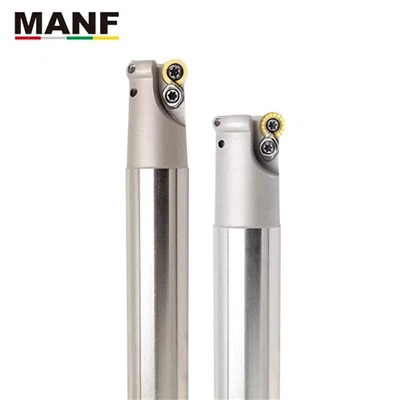
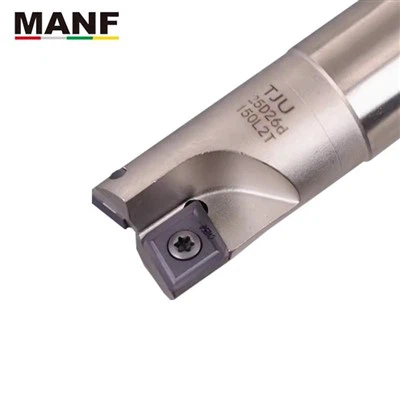
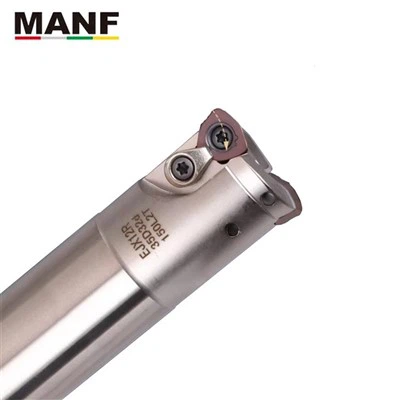
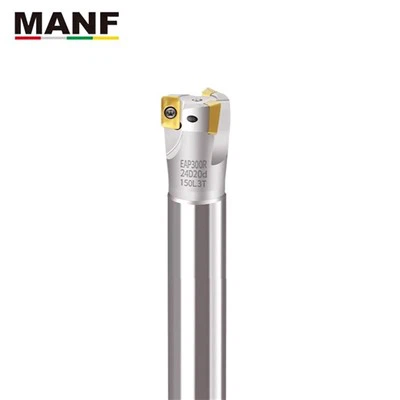
Why Choose Us
Reliable Product Quality
We are proud of our high quality, cost-effective and good service, and have won the praise of customers in various industries such as aviation, medical equipment, automobile manufacturing, mold processing and electronic technology.
Good Service
High-quality after-sales service, tracking usage, and positive feedback. Rapid response within 24 hours.
Product Application
Our widely used in aviation, medical equipment, automobile manufacturing, mold processing and electronic technology and many other industries.
Technical Team
We not only provide high quality and efficient cutting tools, but also have a superb technical team to provide professional and detailed processing solutions.
Characteristics of End Milling Cutters
Cutting Geometry
End mills feature a helical cutting edge and are capable of cutting on the sides, ends, and face of the material. This geometry allows for precision cutting and detailed work on complex shapes.
Versatility
Available in a range of shapes and sizes, end mills can be tailored to specific tasks. They come in various end styles, such as square, ball, and corner radius, to accommodate different milling needs.
Applications
End mills are suitable for a wide range of milling operations. Their precision and flexibility make them ideal for tasks that require detailed and intricate machining, such as creating slots, pockets, and complex contours.
Types of End Milling Cutters


Square End Mills
Square end mills have a flat cutting edge that creates sharp, 90-degree corners on a part. They’re the standard choice for general-purpose milling tasks including slotting, edge profiling, and plunge cutting.
Ball End Mills
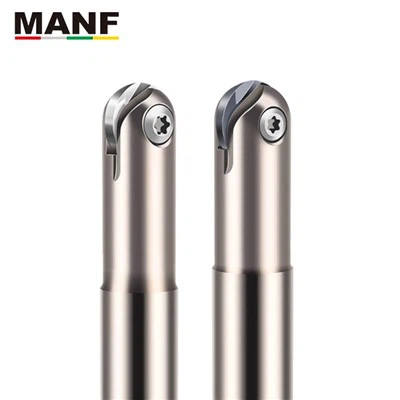
Ball end mills feature a rounded tip that allows for more fluid toolpaths when machining complex shapes, 3D contours, and curved surfaces. These tools excel in die cavities, mold features, and finishing passes that require a consistent surface along non-planar profiles.
Corner Rounding End Mills
Corner rounding end mills are designed to produce smooth, rounded edges on the outside of a part. Instead of leaving sharp corners, which may be prone to cracking or wear, this tool forms radiused transitions that reduce stress concentration and improve the mechanical durability of components.
Corner Radius End Mills
Corner radius end mills strike a balance between square and ball end geometries. Instead of a sharp 90-degree corner, these tools have a slightly rounded transition where the cutting edge meets the flat end.
V‑Bit End Mills
V-bit end mills, sometimes called engraving bits or chamfer tools, are typically used for shallow detail cutting, engraving text, and beveling part edges. These tools feature a sharp, pointed tip with angled cutting edges, forming a “V” shape.
Fishtail End Mills
Fishtail end mills have a flat tip with a pointed center, resembling a fishtail, which allows them to start cuts without walking across the surface. This design makes them a preferred choice in woodworking, plastics, and soft composites where clean entry and precise edge control are critical.
Keyway End Mills
Keyway end mills are precision tools designed specifically for cutting narrow slots that fit keys used in mechanical power transmission. These tools have a straight or staggered flute configuration and are often center-cutting, which means you can plunge them directly into the material.
Process of End Milling Cutters
Setup
Versatile for both horizontal and vertical mills, requiring precise alignment for accuracy, often optimized with CNC machines.
Operation
Enables diverse tasks like slotting, profiling, and contouring, offering multi-directional cutting capabilities for complex shapes.
Applications
Suitable for roughing and finishing, capable of intricate shaping and pocketing for various machining needs.
Product Paramenters
| Surface Speed (V_c) | Calculated as π × tool diameter × rpm. Influences temperature and wear on the cutting edge. |
| Spindle Speed (rpm) | Always set below the coating’s maximum allowable surface speed. Higher speeds reduce cutting forces in soft materials but risk coating breakdown in hard metals. |
| Feed Rate | Formula |
| Axial Depth of Cut (a_p) | For roughing, limit to ≤ 50% of tool diameter. Finishing passes typically use 5–20% of the diameter. |
| Radial Width of Cut (a_e) | Up-milling or adaptive strategies should maintain engagement around 10–25% of the tool diameter. |
| Tool Stick-Out | Should not exceed 3× tool diameter. If unavoidable, reduce axial depth of cut by 30% to prevent chatter. |
| Coolant Flow Rate | Ensure ≥ 4 liters per minute per kilowatt of spindle power. Coolant type depends on material and tool coating. |
| Tool Holder Balance Grade | G2.5 at 20,000 rpm is recommended for vibration-free milling, especially in multi-axis operations. |
| Step-Over Strategy | Use constant or variable strategies depending on desired scallop height and cutter engagement. |
| Chip Thinning Correction | When radial engagement drops below 50% of tool diameter, adjust feed rate by multiplying the programmed chip load by the ratio of tool diameter to (2 × a_e). This keeps chip thickness consistent and prevents rubbing instead of cutting. |
Materials Used in End Milling
|
Material |
Characteristics |
End Mill Features |
Grades/Types |
|
Aluminum Alloys |
Lightweight, easy to machine |
High helix angles, polished flutes |
6061, 7075, 2024 |
|
Steel & Stainless Steels |
Strong, wear-resistant |
High Speed Steel (HSS ) or carbide, TiCN coating |
AISI 304, AISI 316, AISI 1018, AISI 1045 |
|
Titanium Alloys |
Strong, corrosion-resistant, hard to machine |
Variable helix designs diamond-like carbon (DLC) coating |
Grade 5 (Ti-6Al-4V), Grade 2 |
|
Plastics |
Lightweight, prone to melting |
Sharp edges, single or double flutes |
Acrylic, Polycarbonate, Nylon, Delrin, PE, PP |
|
Composites |
Abrasive, risk of delamination |
Compression end mills |
CFRP, GFRP, Kevlar, Epoxy, Thermoplastics |
Which Industries Is End Milling Used
Aerospace Industry
End milling operations are useful in the production of complex components such as engine mounting and bracket housings in aerospace. These components are typically made with aluminum and have very high requirements for accuracy and quality.
Automotive Components
CNC end mill cutters create both rough and smooth finish automotive components; the level of precision, fine details, and surface quality makes them more favorable in vehicle manufacturing.
Precision Parts for Electronics
Miniaturization and accuracy are key demands for electronics parts; carbide end tools are used to make Printed Circuit Boards (PCBs). For instance, smooth holes, and keyways facilitate smooth connection. Other uses include enclosures for electronic devices, mounting components, thermal management elements, etc.
For Medical Devices
Accurate dimensions and finish are critical in medical device manufacturing, directly impacting treatment effectiveness and safety. End milling can process medical-grade titanium, stainless steel alloy, and some plastics to create diagnostic devices, implants, and surgical tools. Additionally, it also allows for the customization of implants according to patient needs.
About Transportation

FAQ